As a supplier in the field of Optical Lenses & Optics, I’ve witnessed firsthand the transformative power of optical lenses in a wide range of industries. The curvature of an optical lens, often overlooked by the casual observer, is a fundamental aspect that dictates the lens’s performance and functionality. In this blog post, I’ll delve into the importance of lens curvature, exploring its impact on image quality, focusing ability, and the diverse applications where these factors play a crucial role. Optical Lenses & Optics
Understanding the Basics of Lens Curvature
Before we dive into the significance of lens curvature, let’s first understand what it means. The curvature of a lens refers to the degree of bend or curve on its surface. Lenses can have different types of curvature, including convex (curving outward) and concave (curving inward). The curvature is typically described by the radius of curvature, which is the radius of the sphere from which the lens surface is derived. A smaller radius of curvature indicates a more pronounced curve, while a larger radius corresponds to a flatter surface.
The curvature of a lens is a critical factor because it determines how light rays are refracted or bent as they pass through the lens. According to Snell’s law, the angle of refraction depends on the refractive index of the lens material and the angle at which the light hits the lens surface. The curvature of the lens affects this angle, allowing us to control the path of light and achieve specific optical effects.
Impact on Image Quality
One of the primary ways in which lens curvature affects performance is through its impact on image quality. A well-designed lens with the appropriate curvature can minimize optical aberrations, which are deviations from the ideal image formation. Aberrations can cause blurring, distortion, and color fringing, all of which degrade the quality of the image.
Spherical aberration is a common type of aberration that occurs when light rays passing through the outer edges of a lens are focused at a different point than those passing through the center. This results in a blurred image, especially at the edges. By carefully controlling the curvature of the lens, we can reduce spherical aberration and achieve a more focused and sharp image.
Another important aspect of image quality is chromatic aberration, which occurs because different wavelengths of light are refracted by different amounts as they pass through a lens. This can cause color fringing around the edges of objects in the image. Aspherical lenses, which have a non – spherical curvature, are often used to correct chromatic aberration and improve color accuracy.
Focusing Ability
The curvature of a lens also plays a crucial role in its focusing ability. The focal length of a lens, which is the distance between the lens and the point where light rays converge to form a sharp image, is directly related to the curvature of the lens. A more curved lens (with a smaller radius of curvature) will have a shorter focal length, while a flatter lens (with a larger radius of curvature) will have a longer focal length.
In applications such as cameras and telescopes, the ability to adjust the focal length is essential for capturing clear images of objects at different distances. By changing the curvature of the lens or using a combination of lenses with different curvatures, we can achieve variable focal lengths and focus on objects near and far.
For example, in a zoom lens, a series of lenses with different curvatures work together to change the overall focal length of the lens system. This allows the user to zoom in on a distant object or zoom out to capture a wider field of view.
Applications in Different Industries
The importance of lens curvature is evident in a wide range of industries, each with its unique requirements and challenges.
Photography and Videography
In the world of photography and videography, lens curvature is crucial for achieving high – quality images. Professional photographers rely on lenses with precise curvature to capture sharp, well – focused images with accurate colors. Different types of lenses, such as wide – angle, telephoto, and macro lenses, have specific curvatures designed to meet the needs of different shooting scenarios.
Wide – angle lenses typically have a more pronounced curvature to capture a wider field of view. However, this can also introduce distortion, which needs to be corrected through careful lens design. Telephoto lenses, on the other hand, have a flatter curvature to achieve a longer focal length and magnify distant objects.
Medical Imaging
Medical imaging technologies, such as microscopes, endoscopes, and ophthalmic lenses, rely on lenses with specific curvatures to produce clear and detailed images of the human body. Microscopes use high – magnification lenses with precise curvature to visualize cells and tissues at a microscopic level. Endoscopes, which are used for minimally invasive procedures, require lenses that can provide a wide field of view and high – resolution images inside the body.
Ophthalmic lenses, such as glasses and contact lenses, are designed to correct refractive errors in the eye. The curvature of these lenses is carefully calculated to compensate for the irregularities in the eye’s natural curvature and focus light correctly on the retina.
Optical Communications
In the field of optical communications, lenses are used to focus and direct light signals in fiber optic systems. The curvature of these lenses is critical for ensuring efficient coupling of light into the fiber and minimizing signal loss. Precision lenses with specific curvatures are used to collimate, focus, and expand light beams, enabling high – speed data transmission over long distances.
Customization and Innovation
As a supplier of Optical Lenses & Optics, we understand the importance of providing customized solutions to meet the specific needs of our customers. Different applications require lenses with different curvatures, and we work closely with our clients to design and manufacture lenses that deliver optimal performance.
We invest in research and development to stay at the forefront of optical technology. Our team of experts is constantly exploring new materials and manufacturing techniques to improve the quality and performance of our lenses. By leveraging the latest advancements in lens design, we can offer lenses with better curvature control, reduced aberrations, and enhanced focusing ability.
Conclusion
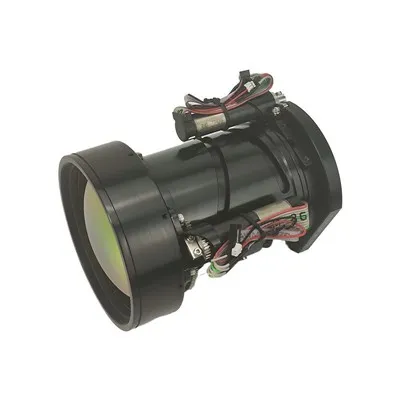
In conclusion, the curvature of an optical lens is a fundamental aspect that has a profound impact on its performance and functionality. From image quality and focusing ability to diverse applications in various industries, the importance of lens curvature cannot be overstated. As a supplier in the Optical Lenses & Optics industry, we are committed to providing high – quality lenses with precise curvature to meet the evolving needs of our customers.
Optoelectronic Systems If you are in need of optical lenses for your specific application, we invite you to reach out to us. Our team of experts is ready to assist you in selecting the right lenses and providing customized solutions. Whether you are a photographer, a medical professional, or an engineer in the field of optical communications, we have the expertise and resources to meet your requirements. Let’s start a conversation about how our optical lenses can enhance your products and projects.
References
- Hecht, E. (2017). Optics (5th ed.). Pearson.
- Smith, W. J. (2007). Modern Optical Engineering: The Design of Optical Systems (4th ed.). McGraw – Hill.
- Born, M., & Wolf, E. (1999). Principles of Optics: Electromagnetic Theory of Propagation, Interference and Diffraction of Light (7th ed.). Cambridge University Press.
Xi’an Zhongke Lead Ir-Tech Co., Ltd.
We are one of the most experienced optical lenses & optics manufacturers in China, specialized in providing high quality OEM products with the industrial grade. We warmly welcome you to wholesale high performance optical lenses & optics at an affordable price from our factory.
Address: Building 8,Hard Technology Enterprise Community No.3000,Biyuan 2nd Rd,High-Tech Zone Xi’an,Shaanxi,China
E-mail: sales@lead-ir.com
WebSite: https://www.leadinfrared.com/
