Hey there, I’m Jake, part of the team that designs and builds high-voltage circuit breakers for power grids, industrial plants, and renewable energy farms — so when someone asks me what we use to catch issues with these heavy-hitting pieces of gear, I’ve got real, on-the-ground takes, not just textbook jargon. Let’s cut through the stuffy manuals and talk about what actually works for fault detection, because if your breaker goes down when the grid’s stressed, that’s not a “technical glitch” — that’s a power outage costing thousands (or millions) in downtime. High-voltage Circuit Breaker
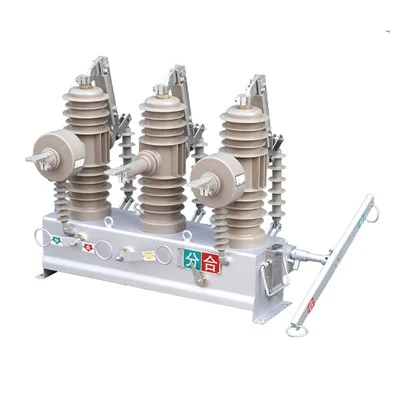
First off, let’s get real: high-voltage breakers don’t just “break” for no reason. Their job is to interrupt massive currents when things go sideways — like a short circuit on a 138kV line — so they take a beating every time they do their job. Over time, those beatings add up: contacts wear out, insulation dries out, coils get gunked up, and hidden faults creep in. The last thing we want is a faulty breaker sitting in a substation waiting to fail when it’s needed most.
Let’s start with the workhorse of fault detection that’s been around forever but still doesn’t get enough love: electrical measurement-based testing. This is the bread and butter for us as a supplier because it’s easy to do, no fancy tools required, and it gives immediate data. We’re talking about things like contact resistance testing. When a breaker closes, current flows through its metal contacts — if those contacts are pitted, corroded, or loose, the resistance spikes. We measure that with a micro-ohmmeter, and if it’s way higher than the factory spec (like, say, our 145kV breakers are supposed to clock in at under 50 micro-ohms; if it’s over 100, that’s a red flag), that tells us something’s wrong with the contacts. Another one here is insulation resistance testing — megohmmeters, basically. High-voltage breakers rely on clean, dry insulation (whether that’s SF6 gas, oil, or solid epoxy) to keep current where it should. If the insulation resistance drops below, say, 1000 megohms for a medium-voltage breaker or 5000 for extra-high, that means moisture’s gotten in, or there’s a crack in the insulation. We always advise our clients to do this quarterly, especially after a storm or a big fault event, because moisture is the #1 enemy of insulation.
Then there’s dynamic timing analysis — this is the test that’s like a stress test for the breaker’s moving parts. A breaker’s whole operation depends on timing: the main contacts have to close in 30 milliseconds or less for a fault, and the arcing contacts (which take the brunt of the arc) have to open just before the main ones, so the arc doesn’t burn up the main contacts. We hook up a timing analyzer to the breaker’s operating mechanism, trigger it to open or close, and it records how long each part takes. If the timing’s off by even 5ms, that could mean the spring mechanism is weak, the linkage is bent, or the solenoid coil is dying. Last year, we had a client reach out saying their substation’s 230kV breakers kept tripping randomly — we sent a field tech to do a timing test, and turns out the operating spring had lost tension after 10 years of use; replacing it fixed the random trips and saved them a lot of headaches.
Next, we’ve got the modern stuff that’s been game-changing in the last 10 years: condition monitoring sensors that run 24/7, not just during scheduled tests. Scheduled tests are great, but if a fault happens between tests, you’re blind. Let’s talk about SF6 gas monitoring first, because 90% of the breakers we build use SF6 for arc quenching and insulation. SF6 is awesome, but it’s not perfect — leaks happen, and over time, it breaks down into toxic byproducts when arcs hit it. We mount pressure and density sensors on our breakers that feed data to the substation’s SCADA system, so if the pressure drops 10% below normal, an alert pops up. But even better, we now incorporate gas analyzers that can detect those byproducts (like SO2 or HF) before they even start causing issues. A client in Texas used one of our SF6 gas monitor sets last year and caught a tiny leak before it turned into a full breaker outage during a summer heatwave — that’s the kind of proactive stuff we live for.
Then there’s vibration and acoustic monitoring. Breakers make a very specific noise and vibration when they operate — each movement, each contact closing, each arc has its own signature. If a bearing in the operating mechanism is wearing out, that signature changes; if an arcing contact is pitted, the vibration when it makes contact shifts. We’ve partnered with a sensor company to build compact, clip-on vibration sensors that don’t require wiring straight into the breaker’s innards (so installation is a breeze for retrofit jobs, not just new builds). One of our older clients with 30+ year-old breakers used these sensors last year and found that one breaker’s vibration pattern matched exactly what we see when a contact spring is failing — they replaced the spring during a planned outage, no unscheduled downtime. Acoustic monitoring is similar, but it’s good for detecting partial discharges (tiny, hidden arcs in insulation that don’t trigger a full trip yet) — those discharge sounds are at frequencies humans can’t hear, so a sensor tuned to 100-500 kHz can pick them up before they damage the insulation.
Wait, let’s not forget partial discharge (PD) testing specifically, because that’s a fault that’s easy to miss until it’s too late. PD happens when there’s a tiny void in the insulation, or a loose connection, that lets small arcs jump before a full short circuit. We do offline PD testing during scheduled outages (using high-voltage PD detectors that inject a test signal and pick up the discharge pulses) and online PD monitoring with those same acoustic or UHF (ultra-high frequency) sensors. Last month, a solar farm client called us because their 66kV breaker was showing weird data from their online PD sensors — we hopped on a video call to walk them through how to interpret the pulses, and turns out it was a loose connection in the bushing, not the breaker itself. Tightening that connection fixed the PD issue, no replacement needed.
Now, let’s talk about the stuff we don’t mess with as much, but it’s still important: visual and infrared inspections. This is the cheapest fault detection method, honestly — we tell every client to send a tech out every month with a thermal camera. Overheated connections show up as bright spots on the thermal image, which means loose or corroded contacts carrying extra current. I’ve seen breakers that looked totally fine on the outside, but had a contact overheating to 150°C (way above the 80°C limit) because a bolt had vibrated loose. Infrared is great for quick checks, and it’s something any substation tech can do with a $500 camera, not a $50,000 test tool.
But here’s the thing: no single method works for every fault. You don’t just rely on vibration sensors, or just do a contact resistance test. It’s a combo — that’s why we recommend our clients use a layered approach: monthly thermal scans, quarterly electrical tests, 24/7 condition monitoring for critical breakers (like those in core transmission lines), and annual specialized testing (like SF6 gas breakdown analysis). We’ve seen too many cases where a client skipped one layer and had a failure that could’ve been prevented. For example, a Midwest utility skipped their annual SF6 gas analysis and a breaker’s gas had degraded so much that it couldn’t interrupt a short circuit during a storm — that caused a 4-hour outage for 20,000 people. That’s why we push for a mixed method, not just one trick.
As a supplier, the feedback we get from our clients is what’s shaped our approach to fault detection. We don’t just sell breakers — we sell support, and a big part of that is helping our clients keep their breakers healthy. A lot of the fault detection tech we incorporate into our new breakers is directly from what our clients told us they needed: easier-to-install sensors, simpler test setups, data that’s actually usable (not just a bunch of numbers a tech can’t decode). We’ve also built a free tool on our site (no weird links, just a simple calculator) that lets clients input their breaker model and operating hours to get a recommended testing schedule — that’s stuff we never would’ve thought of 10 years ago, but it’s super helpful for small utilities that don’t have a big maintenance team.
If you’re in the market for new breakers, or you’re having issues with existing ones (whether that’s unplanned trips, weird noises, or just want to make sure your gear is ready for peak demand), we’re here to help. Our team has been working with high-voltage breakers for over 20 years, so we can walk you through which fault detection methods make sense for your specific setup — whether you’ve got a small distribution substation or a huge transmission grid. Drop us a line to chat through your needs, no pressure, no sales pitch that’s all jargon.
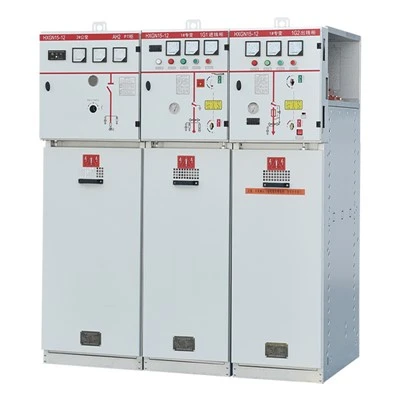
Before I wrap up, let’s make sure I didn’t miss anything important. Oh right, safety! All these fault detection methods have to be done with the right PPE and procedures — high-voltage gear isn’t something you mess with, ever. That’s why we always emphasize that any testing should be done by certified techs, not someone who watched a YouTube video. Fault detection is about keeping the power on, keeping people safe, and saving you money — not just checking a box.
High and Low Voltage Switchgear References:
- IEEE Std C37.100-2017, “Common Requirements for High-Voltage Switchgear and Control Gear”
- IEC 62271-100, “High-voltage switchgear and control gear – Part 100: Alternating-current circuit-breakers”
- “Condition Monitoring of High-Voltage Circuit Breakers: A Review”, Electric Power Systems Research, 2020
- SF6 Gas Management Guidelines for High-Voltage Switchgear, International Council on Large Electric Systems (CIGRE), 2019
- “Vibration Analysis for Circuit Breaker Fault Detection”, IEEE Transactions on Power Delivery, 2018
Zhongtai Electric Power Technology Co., Ltd.
With abundant experience, we are one of the most professional high-voltage circuit breaker manufacturers and suppliers in China. We warmly welcome you to wholesale bulk customized high-voltage circuit breaker from our factory. If you have any enquiry about quotation, please feel free to email us.
Address: High-tech Industrial Park, Chongren County, Fuzhou City, Jiangxi Province (No. 261 Yingbin Avenue)
E-mail: info@zhongtaielectric.com
WebSite: https://www.zhongtaipower.com/
