Hey everyone, it’s Jake here from your go-to lithium ion battery supplier, and today we’re breaking down something that comes up all the time in chats with customers: maximum discharge current, and how it actually shapes your battery’s performance. If you’ve ever wondered why your battery works like a charm for one job and falls flat (or even overheats) for another, this is the tea you need. Let’s get into it—no stuffy textbook jargon, just real talk from a team that sells these things day in and day out. Lithium Ion Battery

First, let’s keep this simple. Maximum discharge current is just the highest amount of juice a battery can push out at once without messing itself up. Like, if your drill says it needs 20 amps to spin that big bolt, that’s your discharge current right there. For us as a supplier, this isn’t just a number we pull out of thin air—every battery we make gets tested at different max currents to make sure it does what it’s supposed to, whether it’s powering a portable cooler for a weekend camping trip or a commercial robot working a 12-hour shift.
Let’s start with the basics of how Li-ion batteries are built, because that’s where this current stuff starts to make sense. Most of our Li-ion batteries have lithium cobalt oxide or NMC (nickel-manganese-cobalt) cathodes, graphite anodes, and that little electrolyte go-between that lets lithium ions move back and forth. When you draw current fast, those ions have to zoom from the anode to the cathode super quick. If you push them too hard, they can’t keep up—think of trying to pour a 5-gallon bucket of water through a garden hose at once; the hose can’t handle the pressure, so it either backflows or gets damaged. That’s exactly what happens to a Li-ion battery when you exceed its max discharge current: lithium plating. Tiny lithium metal crystals start forming on the anode instead of staying inside it, and those little crystals can grow over time, puncture the separator, and cause short circuits or even fires. Not cool, right?
Now, let’s talk real-world performance stuff. The biggest one most customers notice is capacity. If you run your battery at a low discharge current—say, 0.5C, which basically means you take 2 hours to drain a fully charged battery—you’ll get basically the full rated capacity. That’s why your phone lasts all day on standby; it’s only drawing tiny amounts of current. But crank that up to 5C or 10C, like when you’re starting a power tool or a drone taking off, and that capacity drops. We’ve tested this with our own batteries: a 10Ah Li-ion pack that gives 10Wh at 0.5C only gives 7Wh at 5C. That’s a 30% loss, and it’s not because the battery is bad—it’s physics. The faster you drain it, the more energy is wasted as heat instead of going to the device, so you get less runtime.
Heat is another big one, and it’s not just uncomfortable for your device—it’s brutal on the battery’s lifespan. When you discharge at high max current, internal resistance spikes. That resistance turns electrical energy into heat, and if that heat builds up faster than it can escape, the battery’s temperature shoots up. We saw this with a customer a few months back who used our 18650 packs for a custom go-kart project. He was pulling 20C (way higher than our rated 10C max) every time he hit the throttle, and after a month, his packs were bulging. Why? The constant high current was overheating the electrolyte, breaking it down, and making the battery swell. The same thing happens in smaller devices: if you leave your laptop charging while gaming (which pulls a ton of current), it gets hot, and over time, that shortens the battery’s cycle life—how many times you can charge and discharge it before it drops to 80% capacity.
Wait, but not all high discharge is bad—sometimes you need it. Like, if you’re making an electric scooter, you need that burst of current to accelerate from a stop. The key is matching the battery’s max discharge current to your device’s needs. That’s where our team at the supplier comes in. We don’t just sell off-the-shelf packs; we work with you to figure out exactly what current your device needs. For example, a portable power bank for a phone only needs 2.1A, so a low-discharge pack is fine and cheaper. But a electric chainsaw that needs 15A? We’ll spec a high-discharge pack with cells rated for 20A peak, so it can handle that burst without overheating or dying early.
Another thing people don’t always realize: max discharge current affects power output, not just runtime. Power is basically current times voltage (P=I*V), right? So a battery with a higher max discharge current can deliver more power at the same voltage. That’s why a high-discharge battery is perfect for power tools, drones, or electric vehicles—they need that instant power. But if you don’t need that power, buying a high-discharge battery is a waste of money. It’s like buying a truck engine to drive to the grocery store; it works, but you’re paying for something you don’t need.
Let’s touch on safety again, because that’s non-negotiable for us. We test every single batch of our batteries at 125% of their rated max discharge current to make sure they won’t short or catch fire. Last year, we had a customer who tried to repurpose one of our robot batteries for a custom welding rig. He pulled 3x the max current, and the battery overheated so bad it melted the plastic casing. It wasn’t a defect in our battery—it was using it outside the specs we provided. That’s why we always go over use cases with our clients: tell us what device you’re powering, how often you need bursts of current, and we’ll hook you up with the right pack so you don’t have to deal with that headache.
Cycle life is a long-term performance factor that ties right into max discharge current. Studies (we use a lot of these in our testing lab, by the way) show that discharging at 1C vs 5C can cut cycle life in half. Discharge at 10C, and it might be 60% less. Why? Because of that lithium plating we talked about earlier, plus the extra heat breaking down the cathode material. The lithium ions can’t move properly anymore, so fewer of them are available to charge and discharge. That means your battery will stop holding a charge much sooner if you’re constantly running it at max current way above its rating.
Wait, but what about peak vs continuous discharge current? That’s another confusing point we get all the time. Peak is the short burst of current a battery can handle for 10 seconds or less—like when you’re launching a drone. Continuous is the max current you can pull for a long time—like when the drone is flying steady. A lot of brands mix these up in their specs, which is sketchy. At our company, we always list both, because you need to know both for your use case. If you’re a drone pilot, you need the peak current to take off, but the continuous current for the rest of the flight. If you’re a robot manufacturer, you care more about continuous current because the robot is moving for hours at a time.
Here’s a tip from our team: when picking a battery, always leave a 20% buffer on the max discharge current. So if your device needs 10A continuous, get a battery rated for at least 12A. That way, you’re not pushing it to the limit all the time, which extends its life and keeps it safe. We see so many customers skip this, and then they come back a few months later complaining their battery died early. A little extra buffer goes a long way.
Let’s talk about how this all applies to the work we do as a supplier. We don’t just send batteries your way and cross our fingers—our engineers will sit down with you to calculate exactly what max discharge current you need. For example, we had a solar inverter client who was using a standard battery that was dying because they needed extra current to kick on the inverter during peak sun. We swapped them to a high-discharge pack with a higher rated max current, and their runtime went up by 40% and their battery life doubled. That’s the kind of solution we’re here for, not just parts.
Another real example: we did a custom pack for a food delivery e-bike company. They needed a battery that could handle hill climbs (which need extra current) all day, every day, for three shifts. We built a pack with cells rated for 15A continuous, 30A peak, plus a built-in thermal management system to handle the heat from that steady high current. Six months later, their maintenance team told us the batteries were still holding charge at 90% capacity, which was way better than their old supplier’s packs. That’s what happens when you match the max discharge current to the actual workload, not just a spec sheet number.
Now, let’s get to the mistakes people make. The most common one is assuming a “one-size-fits-all” battery works. A 10Ah low-discharge battery for a phone won’t work for a drone that needs 20A of current. Another mistake is ignoring heat—even if you’re at the right max current, if the battery can’t cool down, it’s going to degrade fast. That’s why we design our packs with vents or thermal paste, depending on the use case, to keep temps in check even when you’re pushing current.
At the end of the day, max discharge current isn’t just a random number on a battery label. It’s a core performance and safety factor that determines how long your battery lasts, how much power it delivers, and how reliable it is. If you’re in the market for new batteries, or if your current set isn’t cutting it because they can’t handle the current your device needs, hit us up. We’ll walk through your project, answer all your questions, and make sure you get the right battery that fits your needs, no extra fluff, no hidden specs.
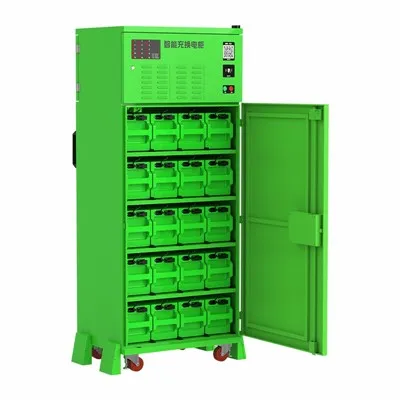
We work with everyone from small startup makers to big commercial teams, so whatever your project is—portable electronics, industrial robots, electric vehicles, whatever—we’ve got you. Don’t stress about max discharge current or any other battery jargon. That’s our job, to break it down for you so you don’t have to. Reach out, let’s chat, and get you the lithium ion battery that actually works for you.
Suspension References:
- Linden, D., & Reddy, T. B. (2002). Handbook of Batteries (3rd ed.). McGraw-Hill.
- Zhang, S. S. (2006). The effect of the discharge current on the performance of Li-ion batteries. Journal of Power Sources, 161(2), 1379-1383.
- Vetter, J., Novák, P., Wagner, M. R., Veit, C., Möller, K. C., Besenhard, J. O., & Winter, M. (2005). Ageing mechanisms in lithium-ion batteries. Journal of Power Sources, 147(1-2), 269-281.
- Liu, W., et al. (2020). Understanding lithium plating in lithium-ion batteries: Mechanisms, detection, and mitigation. Progress in Energy and Combustion Science, 78, 100857.
Jiangsu Changyun Drive Techniques Co., Ltd.
As one of the leading lithium ion battery manufacturers and suppliers in China, we offer a wide range of products with superior quality. Please rest assured to wholesale advanced lithium ion battery from our factory. If you have any enquiry about cooperation, please feel free to email us.
Address: Building B, 1st Floor, Chuangyan Port, Science and Education City, Wujin District, Changzhou City, Jiangsu Province
E-mail: eva@czbenma.com
WebSite: https://www.cyevenergy.com/
